SIPHELELE NKETO
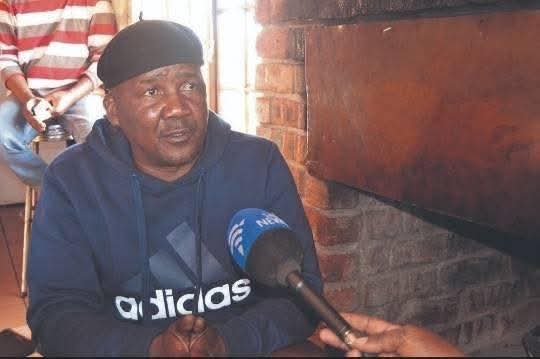
MESSAGES of condolence have been pouring in since the death of Ronnie Matshaya was announced on Monday, August 18.
He died in a car accident with two other Kokstad residents.
Many have described the former Umkhonto weSizwe (MK) commander as a gallant freedom fighter who spent his life fighting for freedom. Some said his contribution will never be forgotten in the history of South Africa.
The African National Congress in the OR Tambo region extended their heartfelt condolences to his family, friends and comrades.
“Their loss is also a profound loss to our region and the broader movement,” said Vinny Tsita, the ANC’s regional secretary in OR Tambo.
Matshaya, also known as Mfanelo Dan “Ronald Ronnie Dlamini” Matshaya, left South Africa in the early 1980s for Lesotho where he joined the ranks of the ANC in exile.
He underwent military training in Caculama, Angola, as part of the Madinoga Detachment.
By late 1983, he was the firearms instructor at Caculama Camp in Malange, Angola.
In 1985, he received advanced training in special warfare in Yugoslavia, returning to Angola as a military tactics instructor. He later served as base commander at Cetywayo Base in Caculama and as commander of the Camp Reconnaissance Unit.
In 1986, he was appointed deputy commander of the Zola Dubeni Icing Unit, a specialised structure tasked with eliminating askaris inside South Africa. The following year in 1987, Matshaya and his unit were captured in Bophuthatswana by the apartheid regime and were subjected to detention and torture, moved between Kei Mouth, East London, Engcobo, Mqanduli, Ngangelizwe and ultimately Wellington Prison in Mthatha, where he awaited trial with his comrades.
They were later sentenced to 10 years’ imprisonment, with three years suspended.
In October 1989, following the release of Walter Sisulu and other Rivonia trialists, Matshaya and his fellow combatants were also released on indemnity by the then Transkei leader Major General Bantu Holomisa.
After his release, he reported to Lusaka MK Military Headquarters for debriefing and was redeployed as deputy commander of the Transkei region.
Alongside his comrades, he trained many intakes of the MK internal operatives in Port St John’s and other bases.
He was later granted amnesty by the Truth and Reconciliation Commission (TRC) for a number of operations carried out by himself and his units.
Throughout his service, he also acted as a bodyguard to Chris Hani, Oliver Tambo and Nelson Mandela.
Although he completed a bridging course in Zambia in preparation for SANDF integration, he never formally integrated.
He went on to become the first MKMVA regional chairperson in the Transkei region, continuing his unwavering dedication to the liberation movement and community service.