



ANDILE MOSHOESHOE
THE criteria governing access to agricultural funding for emerging farmers in South Africa are expected to undergo review, driven by increasing concerns that the current requirements create a significant barrier to financial and other government support for many applicants.
This emerged at the Agricultural Symposium in Sani Pass, near Underberg, on Monday, March 9, themed: “Unlocking Agricultural Land Reform for Inclusive Growth, Sustainability, and Rural Transformation.”
The event was convened to foster dialogue between the government and farming community on practical ways to strengthen the agricultural sector.
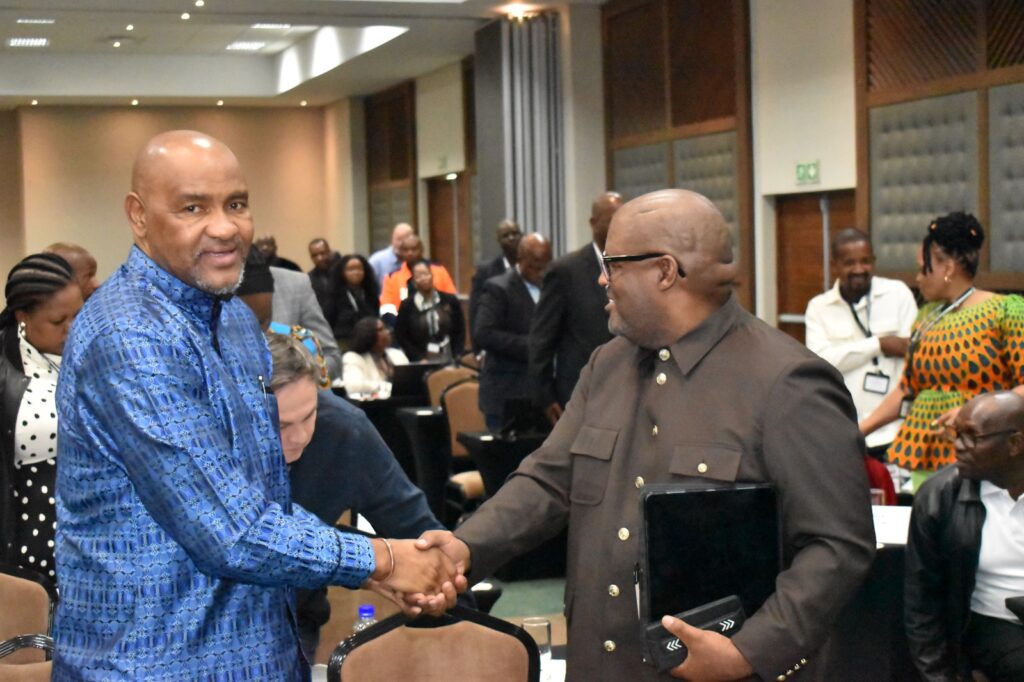
Attending the gathering was the minister of agriculture Mzwanele Nyhontso who acknowledged that the existing funding framework may inadvertently exclude a significant number of small-scale and emerging farmers. He indicated that the government may consider revisiting the policy guidelines to remove obstacles hindering access to support programmes.
The deputy minister of Military Veterans Richard Mkhungo also attended, joined by local mayors as well as emerging and established farmers.
Discussions centred on strengthening cooperation between government and farmers, while devising strategies to overcome persistent challenges confronting the sector.
Among the key issues raised was the difficulty faced by farmers who have limited formal education. It was said that in many cases, applications for government funding require formal documentation and educational qualifications that some farmers do not possess, effectively shutting them out of critical support mechanisms.
This concern was particularly underscored by emerging farmer Nozuko Cezula, the owner of Nozuko Farming in Kokstad.
She said that many individuals, who possess both the passion and practical experience required for farming, are frequently sidelined when seeking assistance, largely because they cannot read or write.
According to Cezula, numerous farmers may have livestock, land and an unwavering determination to succeed, yet language and literacy barriers often prevent them from navigating the bureaucratic requirements attached to government support.
She further said that some people who grew up working on farms possess extensive knowledge of livestock and crop production, but are excluded from opportunities simply because they lack qualifications often required when applying for government assistance. Executive mayor for the Harry Gwala District Municipality Zamo Nxumalo acknowledged that while certain parcels of land have indeed been returned to communities, some of these farms remain unused and overgrown because beneficiaries lack adequate agricultural training. “What is particularly concerning is that this is occurring in a district whose economy relies heavily on agriculture, with nearly 30% of South Africa’s milk production originating from the Harry Gwala district,” Nxumalo said. Local farmers also used the platform to raise their grievances, with some lamenting widespread jealousy within farming circles and alleging that funds earmarked for emerging farmers often fail to serve their intended purpose.