

ANDILE MOSHOESHOE
THE Harry Gwala District Municipality mayor Zamo Nxumalo has firmly dismissed claims that the municipality’s accelerated push to fast-track major water infrastructure projects in Kokstad is a political gimmick linked to the forthcoming elections.
He insisted that the programme was conceived long before.
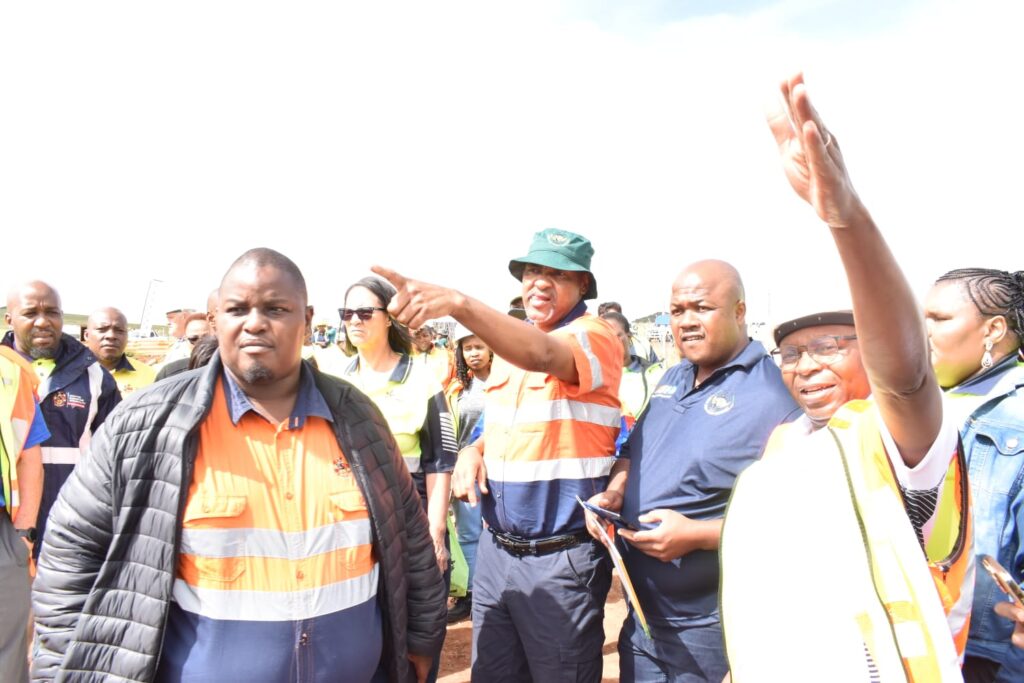
He made his remarks on Tuesday, March 24, during an oversight visit to Kokstad to inspect a series of strategic water development initiatives as well as the R200 million Kempsdale Dam project.
The project is one of the district’s flagship interventions aimed at strengthening long-term water security in the area of Kokstad.
Nxumalo said the municipality’s reaction towards water delivery should not be viewed through an electoral lens but rather as the continuation of a long-standing developmental agenda born out of necessity.
“Our district has historically faced serious financial challenges, and we also serve a vast geographical area,” he said Nxumalo.
His visit also formed part of a broader multi-stakeholder inspection mission conducted in partnership with the National Department of Water and Sanitation, uMngeni-uThukela Water, and other public entities tasked with driving and monitoring infrastructure delivery.
He revealed that Kokstad’s current water infrastructure programme dates back to 2019, underscoring that the projects were initiated years before the present political climate.
He further noted that in 2024, the municipality officially launched the commencement of the Kempsdale Dam project alongside the then Minister of Water and Sanitation, Senzo Mchunu.
He further said that the municipality has also invested in critical storage infrastructure to bolster the town’s supply network. These include: the construction of the 2.5 megalitre Bhongweni Reservoir, the 1.5 megalitre Shayamoya Reservoir, and an additional 1 megalitre reservoir in Shayamoya.
Nxumalo said the municipality was encouraged by the pace at which the Kokstad water projects are progressing, particularly after earlier assessments showed that the town’s existing water infrastructure had been severely outstripped by rapid population growth and urban expansion.